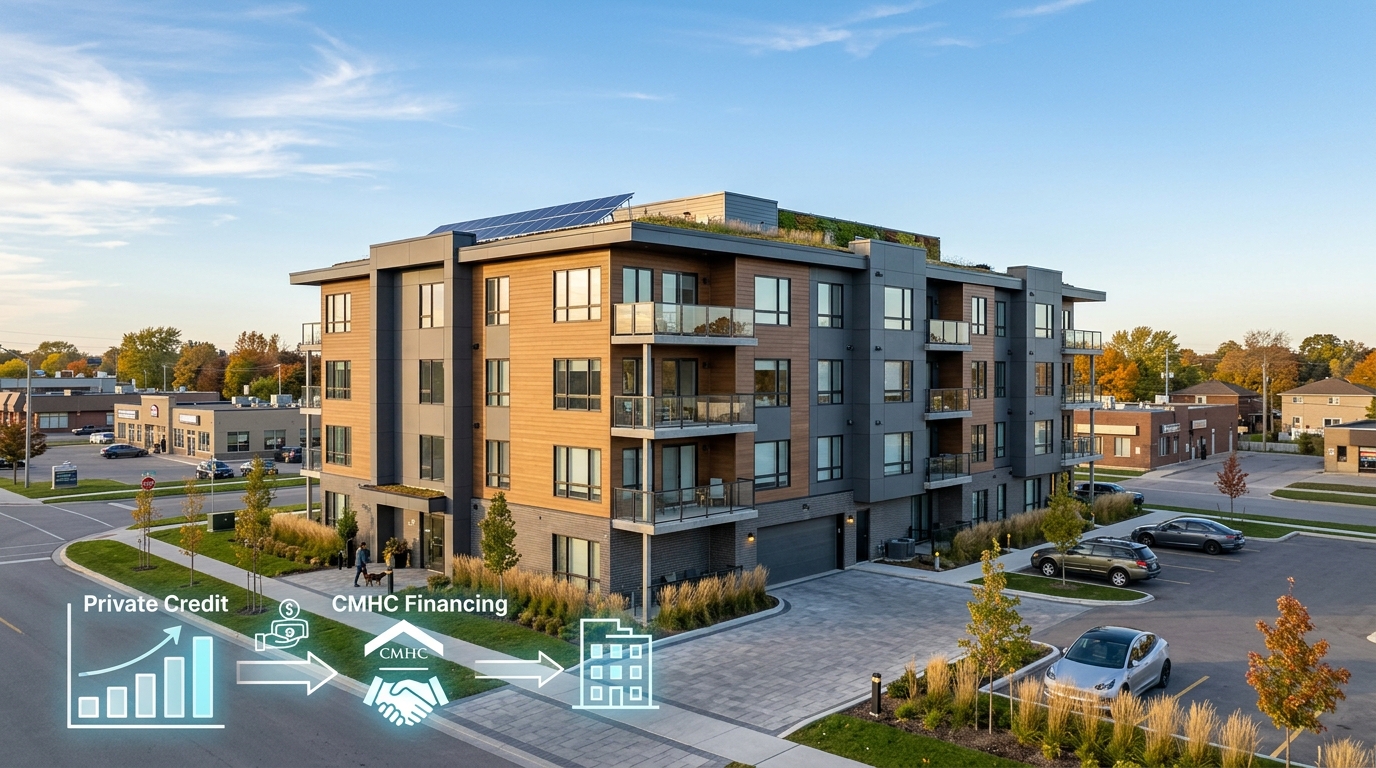
The Canadian real estate market, particularly in Ontario's secondary markets, continues to present a compelling narrative for investors focused on structural stability. At Yield the North, our thesis remains unwavering: multifamily and affordable housing are the most durable segments of Canadian commercial real estate. This conviction is not merely an outlook but a direct interpretation of market fundamentals, regulatory frameworks, and unparalleled financing opportunities. While broader market narratives may focus on corrections or shifting dynamics, the signal for purpose-built rental (PBR) and affordable housing developments is clear and strong: an expanding pipeline, underpinned by private credit and government-backed financing, is addressing a persistent supply gap.
The Unfolding Purpose-Built Rental Story in Ontario
The landscape of Canadian housing is defined by an undeniable structural supply deficit. Demand, anchored firmly in robust immigration targets and consistent household formation, is not discretionary. It is a fundamental need that the existing housing stock cannot meet. This imbalance creates an inherent stability for rental housing, a stability that is now translating into a significant pipeline of purpose-built rental projects across Ontario.
Recent reports confirm this momentum. Capital, for instance, has launched its 'Address' brand, specifically targeting purpose-built rental apartments, signaling institutional confidence in the sector. The Urban Land Institute (ULI) echoes this sentiment, asserting that 'much more' must be done to increase rental housing supply, highlighting the ongoing need that developers are now actively pursuing. The Globe and Mail identifies a 'wave of purpose-built rental units' giving tenants more options, but more critically, indicating a growing market response to the supply crunch.
Cities across Ontario are actively participating in this push. Mississauga, recognizing the critical need, has introduced additional incentives to encourage purpose-built rental housing development. Toronto has commenced construction on new purpose-built rental homes in the Beaches, demonstrating municipal commitment to expanding the rental stock. These initiatives are not isolated events; they represent a concerted effort across the province to facilitate the creation of long-term rental supply.
This expansion of the PBR pipeline is not a fleeting trend. It is a strategic response to a deeply rooted market need, reinforced by policy and financing mechanisms that make it an exceptionally attractive investment.
CMHC MLI Select: The Unmatched Capital Advantage
At the heart of the purpose-built rental investment thesis lies CMHC MLI Select financing. This program stands alone in the commercial real estate stack, offering up to 95% loan-to-value (LTV) and 50-year amortizations for purpose-built rental and affordable housing projects. No other asset class in Canada benefits from comparable government-backed financing terms. This is not merely attractive financing; it is a fundamental de-risking mechanism for investors and developers.
The benefits extend beyond high LTV and long amortization. MLI Select provides competitive interest rates, often below conventional market rates, thereby enhancing project viability and investor returns. The stability offered by CMHC's backing reduces the cost of capital, making otherwise challenging projects feasible. For developers, this means the ability to undertake larger, more impactful projects with less upfront equity. For investors, it translates to stronger, more predictable cash flows and a higher return on equity.
Consider a typical PBR project: the development phase requires significant capital, often with a longer lead time before revenue generation. Traditional bank financing can be restrictive, particularly for projects with an affordable housing component or those seeking to maximize social outcomes alongside financial returns. This is where the synergy with private credit becomes indispensable.
Private Credit's Essential Role in the PBR Pipeline
While CMHC MLI Select provides the long-term, efficient takeout financing, private credit plays a critical, often overlooked, role in bridging the gap from conception to stabilization. Private lenders are uniquely positioned to provide flexible, timely capital for the development and construction phases of purpose-built rental projects, particularly those targeting MLI Select eligibility.
Private credit providers can offer construction financing, mezzanine debt, and bridge loans that traditional banks may shy away from due to perceived risk, specific project characteristics, or the need for speed. This flexibility is crucial for PBR developers navigating complex zoning, permitting, and construction timelines. By providing capital that aligns with the specific needs of a development cycle, private credit accelerates the delivery of much-needed housing.
For projects aiming for MLI Select's highest benefits, which often include affordability components, energy efficiency standards, or accessibility features, private credit can fund the incremental costs associated with achieving these benchmarks. This ensures that projects are built to MLI Select's rigorous standards from the outset, guaranteeing eligibility for the most favorable long-term financing.
Furthermore, private credit allows developers to maintain equity control and avoid diluting ownership in the early stages of a project. This strategic capital deployment is not just about filling a funding gap; it's about enabling the efficient execution of projects that ultimately benefit from the superior long-term financing of CMHC MLI Select.
Affordable Housing: The Triple Tailwind Advantage
Affordable housing sits at the intersection of all three major tailwinds supporting Canadian real estate: structural demand, regulatory protection, and unparalleled financing. The definition of affordable housing within the MLI Select program, often tied to median market rents, provides a clear framework for developers. Projects that commit to maintaining a certain percentage of units at affordable rents for a specified period gain access to the most advantageous MLI Select terms.
This segment is not only the safest investable segment in Canadian real estate today, but also the most impactful. The demand for affordable housing is acute and growing, driven by demographic shifts and the rising cost of living. Governments at all levels are actively incentivizing its creation through programs like MLI Select, tax credits, and municipal fee waivers, as seen in Mississauga's recent policy.
For investors, this means a revenue floor protected not just by rent control regulations, but also by the sustained demand and direct government support. Asking-rent volatility, often highlighted in market commentary, is largely noise for stabilized affordable housing projects. The signal is in the in-place revenue, the structural demand that ensures high occupancy, and the long-term, low-cost capital provided by CMHC MLI Select. Private credit, by facilitating the construction of these projects, becomes a direct enabler of this stable, impact-driven investment.
Mid-Year Market Review: A Strategic Buy Signal
As we approach the mid-year mark, a review of the market reveals a strategic buy signal for purpose-built rental and affordable housing. While interest rate decisions from the Bank of Canada and broader economic indicators certainly influence market sentiment, they do not alter the fundamental drivers of Canada's housing crisis. The supply gap persists, immigration continues, and household formation remains robust.
Any perceived market correction or decline in certain segments of real estate should be viewed as a rotation of capital, not a systemic failure of the housing market. Capital is intelligently moving towards segments with clear, defensible fundamentals and superior risk-adjusted returns. Purpose-built rental, particularly with an affordable housing component, is precisely where that capital is finding its most productive deployment.
The confluence of municipal incentives, federal financing, and flexible private capital is accelerating the PBR pipeline. This is not just about building more units; it is about building a more resilient, stable, and investable housing future for Ontario. For investors seeking durable returns and significant social impact, the expanding purpose-built rental pipeline, supercharged by private credit and CMHC MLI Select, represents the clearest path forward in Canadian real estate today. The opportunities are not in navigating challenges, but in strategically investing in the solutions that address fundamental market needs.
The Path Ahead: Sustained Growth and Impact
The trajectory for purpose-built rental and affordable housing in Ontario is one of sustained growth. The ecosystem of government support, developer expertise, and private credit innovation is maturing, creating a virtuous cycle. As more PBR projects come online, the proven stability of their cash flows and the efficiency of MLI Select financing will attract even greater capital allocation to this sector.
Investors looking for long-term value creation should recognize that the current environment is not one of uncertainty for this segment, but rather one of clear opportunity. The essential nature of housing, combined with a persistent supply deficit and robust policy support, makes purpose-built rental and affordable housing a cornerstone of any resilient Canadian real estate investment portfolio. The pipeline is building, and private credit is the engine.